Polygonscan wallet is a Polygon PoS address view for balances, tokens, NFTs, transactions, and POL gas
In short: Polygon PoS address explorer view for checking wallet balances, token holdings, NFT activity, transactions, and POL gas use.
Polygonscan wallet is a public explorer page that turns a Polygon PoS address into a readable account history: native POL balance, token holdings, NFT transfers, contract calls, approvals, timestamps, block confirmations, and gas paid. It gives a wallet owner, recipient, trader, analyst, or support team a shared record of what happened on-chain without needing access to private keys, seed phrases, or the wallet app that signed the transaction.
The value of the page comes from its neutrality. A Polygon address has the same public activity whether someone opened it from MetaMask, Coinbase Wallet, Rabby, a hardware wallet, a multisig, or a smart contract account. The explorer reads confirmed network data and presents it in tabs, filters, hashes, and token summaries, so the address becomes easier to audit than a raw stream of block data.
Reading a Polygon address without opening the wallet app
A wallet app shows the owner's current view; an explorer shows the chain's public record. Paste an address into the search field and the account page displays the native POL balance, the estimated token portfolio, recent transactions, token transfer events, NFT activity, and contract interactions tied to that address. Polygonscan wallet is useful when the signer is unavailable, the app interface is out of sync, or a counterparty needs a transaction hash checked from their own device.
That distinction matters after a payment, bridge transfer, swap, mint, or contract approval. Wallet apps compress activity into friendly labels, while explorer pages expose the hash, block number, nonce, method name, fee, status, and event logs. Those details explain whether a transaction succeeded, failed, reverted, or is simply unrelated to the address being inspected.
What the balance area tells you about POL and tokens
The native balance line shows POL, the gas token used on Polygon PoS. POL replaced MATIC as the current native gas asset in Polygon's upgraded token system, while older histories still contain references to MATIC in legacy contexts and token records. The address view separates the native gas balance from ERC-20 token balances, which prevents a common mistake: seeing tokens in the account while leaving too little POL to pay for the next action.
Token holdings come from contract records rather than a single bank-style ledger. ERC-20 assets such as stablecoins, liquid staking tokens, wrapped assets, and governance tokens appear because their contracts record balances and transfer events. Prices and portfolio totals are convenience estimates; the transaction log and token contract history remain the stronger evidence for what moved, when it moved, and which contract handled the transfer.
Following swaps, transfers, and contract calls from one hash
Every Polygon transaction receives a hash. Opening that hash from a Polygonscan wallet page gives the full execution record: sender, recipient, value, gas price, gas used, block, input data, decoded function when available, and emitted events. This is the quickest path from a confusing wallet notification to a concrete explanation of the on-chain result.
A simple transfer shows a direct movement of POL or a token event between addresses. A swap adds router calls, token approvals, pool interactions, and output events. A failed transaction still consumes gas because validators processed the attempted execution, even when the contract returned an error. The status field and logs make that difference visible without guessing from a wallet's short activity label.
Token approvals deserve their own review
Approvals are among the most important wallet records on Polygon. An ERC-20 approval grants a spender contract permission to move a token up to a specified amount. NFT approvals follow ERC-721 or ERC-1155 rules and authorize individual tokens or broader operator access. Polygonscan wallet activity helps identify when those permissions were created and which contract received them.
Reviewing approvals matters after using a decentralized exchange, marketplace, game, bridge, or claim contract. A past approval does not move funds by itself, yet it creates a permission path that remains relevant until changed or revoked through a compatible wallet or approval-management tool. The address page provides the transaction trail needed to recognize the spender, token, amount, and timing.
How NFT activity appears on a Polygon address
Polygon hosts ERC-721 and ERC-1155 collections across games, loyalty programs, marketplaces, memberships, and art projects. The NFT tabs on an address page group transfers separately from fungible token movements, which makes collection activity easier to scan. A mint, marketplace purchase, airdrop, burn, and wallet-to-wallet transfer each leaves a different event pattern.
For ERC-1155 assets, one contract handles many token IDs, so the token ID and quantity matter as much as the collection name. For ERC-721 assets, each token ID represents a distinct item. The explorer view keeps those IDs visible, making it easier to reconcile marketplace receipts, inventory changes, and unexpected incoming assets.
Using timestamps, nonces, and blocks to reconstruct activity
Wallet history becomes clearer when it is read chronologically. Blocks provide the settlement order, timestamps provide a human-readable sequence, and nonces show the ordering of transactions sent from the same externally owned account. If two outgoing transactions look similar, the nonce and hash separate them cleanly.
Polygonscan wallet pages also help when support teams ask for proof of payment. A transaction hash, the sending address, the receiving address, token contract, amount, and success status create a concise evidence trail. Screenshots are less reliable than hashes because hashes lead back to the same public record for anyone inspecting the transaction later.
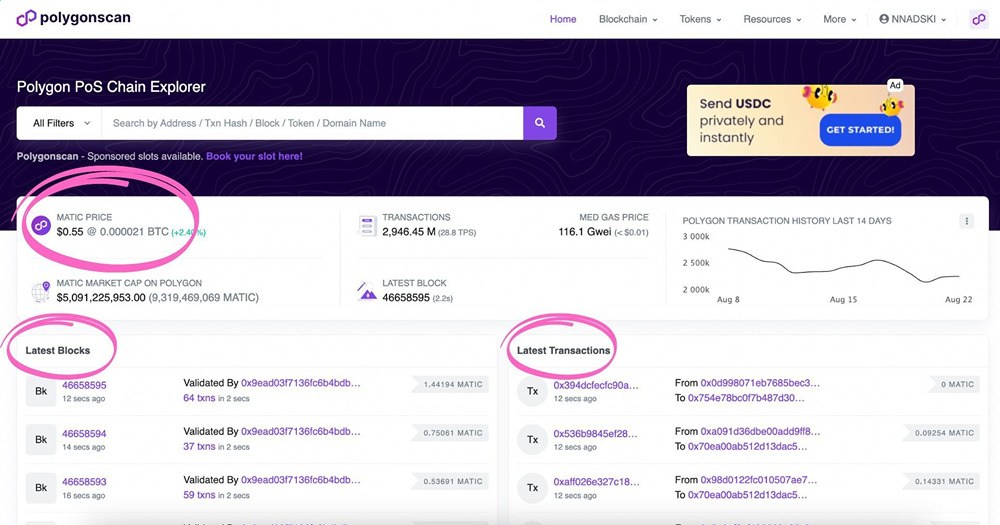
When a wallet page explains missing funds
Missing balances usually trace back to one of a few visible causes: the asset moved to another address, the user is viewing a different network in the wallet app, the token contract is unfamiliar to the wallet interface, a bridge transfer created a pending step, or a contract interaction swapped one asset for another. The explorer page narrows the problem by showing confirmed Polygon activity rather than app state.
- Check the latest outgoing transactions for the exact asset.
- Open the token transfer tab when the native POL balance is unchanged.
- Compare the contract address for similarly named tokens.
- Review failed transactions separately from successful transfers.
- Look for approval transactions before a later token movement.
This workflow keeps the investigation anchored to signed actions and contract events. Polygonscan wallet does not need the user's login, device, or seed phrase to show the trail, which makes it practical for troubleshooting with an exchange desk, marketplace support channel, accountant, or internal operations team.
Polygon wallet explorers alongside portfolio trackers
Portfolio trackers and wallet apps optimize for convenience: charts, labels, watchlists, DeFi positions, and alerts. Explorer pages optimize for evidence. They show low-level records that remain useful when a portfolio tool misses a token, groups a DeFi position incorrectly, or hides the specific method called by a smart contract.
Using both gives a fuller picture. A tracker summarizes holdings across chains, while Polygonscan wallet records provide the Polygon PoS transaction truth behind one address. Advanced users add contract pages, token holder lists, event logs, and decoded input data when they need to inspect a protocol interaction more deeply.
Getting started with a clean address check
Begin with the address itself, not a token name or a screenshot. Confirm that the address format is an EVM-style hexadecimal account, then search it and scan the overview before opening individual tabs. The native POL balance answers whether the account has gas for future transactions. The transaction list shows outgoing actions, incoming transfers, and contract calls in settlement order.
Next, open the token and NFT tabs only for the assets relevant to the question. A support case about a stablecoin transfer needs the token contract, amount, sender, recipient, hash, and status. A question about a marketplace item needs the collection contract, token ID, transfer event, and timestamp. Polygonscan wallet works best when each search starts with the exact address and ends with the exact hash that proves the event.
Frequently asked questions about Polygonscan wallet
What does a failed transaction mean on a Polygon wallet page?
A failed transaction means the network processed the submitted transaction, but the smart contract execution did not complete successfully. The status, gas used, and error details explain the failure. Gas is still spent because validators included the attempt in a block. The token or NFT movement expected from that transaction does not occur unless the logs show a successful transfer event.
Which token pays gas for wallet transactions on Polygon PoS?
POL is the native gas token for Polygon PoS transactions. A wallet needs enough POL to pay network fees when sending assets, approving tokens, swapping, minting NFTs, or calling smart contracts. ERC-20 tokens in the same address do not replace the gas requirement unless a separate app sponsors fees through a specific account-abstraction flow.
Can a Polygonscan wallet page show tokens my app does not list?
Yes. Wallet apps rely on their own token lists, price feeds, spam filters, and display rules. An explorer address page reads token contract events and balances from Polygon records, so it surfaces assets that a wallet interface hides or has not indexed yet. The contract address is the important identifier when names or symbols look similar.
Recovering access if the explorer shows funds in my address?
The explorer proves that assets are associated with the public address, but recovery depends on the wallet credentials that control that address. The private key, seed phrase, hardware wallet, or smart account recovery setup signs transactions. The address page helps confirm what is present and where it moved, but it does not provide signing access.
Why does an approval appear without a token transfer?
An approval records permission, not movement. It authorizes a spender contract to transfer a token later under the rules of that token contract. Many swaps, marketplace listings, and DeFi deposits start with an approval transaction, then use a second transaction for the actual action. Reviewing both records shows whether permission was only granted or followed by a transfer.